Content Management System
Content Management System Informatic Engineering Muhammadiyah University of Cirebon
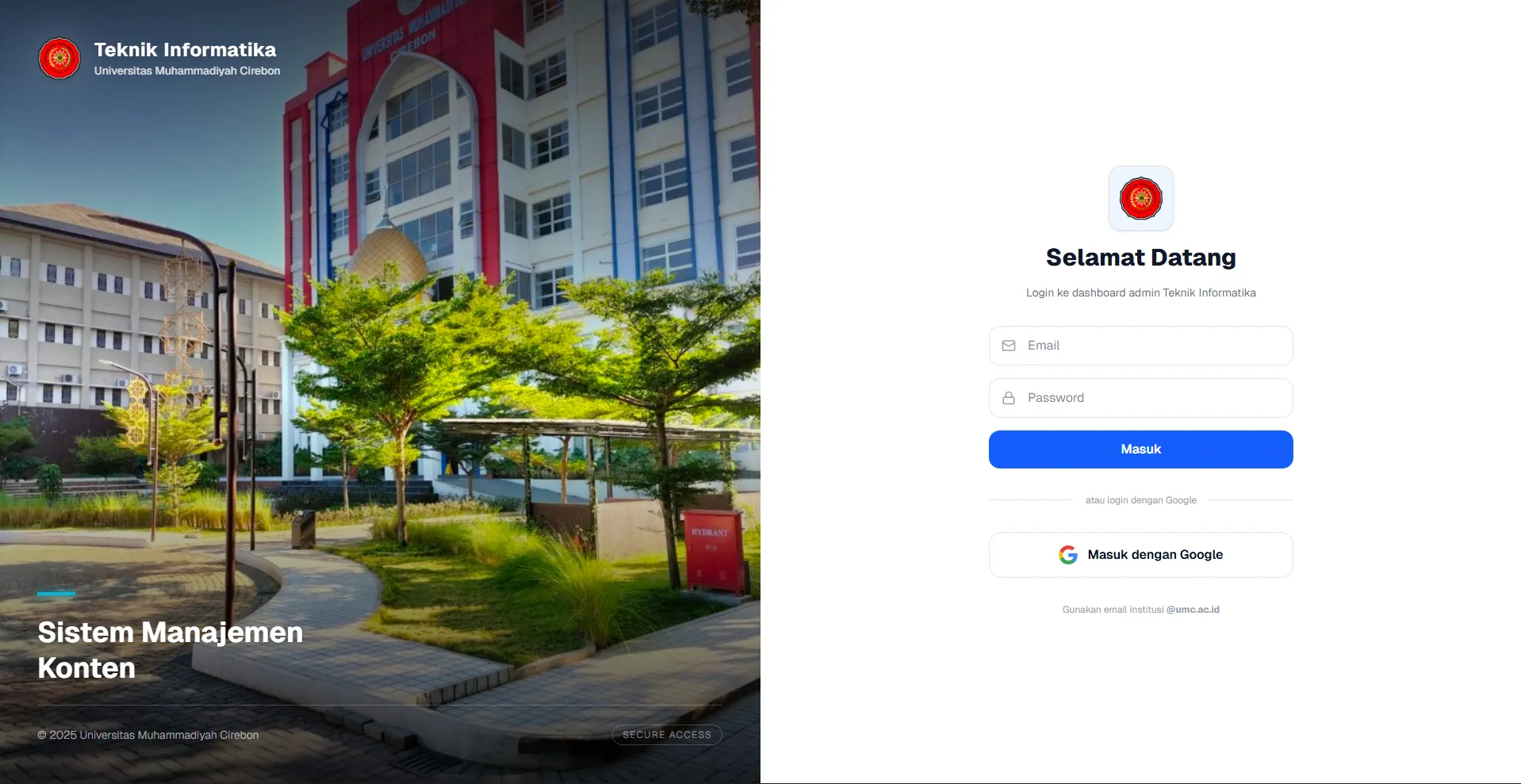
Description
The UMC Information Technology CMS is a web-based content management platform designed to manage academic information in a centralized, structured, and efficient manner. The system supports the management of various types of content, from news and announcements to academic data, within a single integrated digital ecosystem.
The primary focus of development is on user experience, both for administrators managing content and end-users accessing information quickly and comfortably.
Background
Before this system was developed, information management was done manually and scattered across various media, making the update process inefficient, prone to inconsistencies, and difficult to control.
This CMS is presented as a solution to introduce a more modern, structured, and easy-to-operate content management flow, while also improving the quality of information delivery to students and the public.
Main Features
Centralized admin dashboard for content management
Dynamic content management (CRUD) for news, announcements, and pages
Faculty, position, and facility data management system
Media upload and management (images & files)
Categories and tagging for a more organized content structure
Responsive and informative public website
Multi-language support (internationalization / i18n)
Integration with REST API for data distribution
Roles & Contributions
Developing end-to-end frontend, including admin dashboard and public website
Building an interactive admin dashboard to simplify the content management process
Implementing a responsive, informative, and user-friendly public website appearance
Integrating the frontend with API to ensure smooth data flow
Designing a modular and reusable component structure for application scalability
Optimizing application performance to increase speed and access comfort
Implementing multi-language feature (i18n) on the frontend side
Maintaining design and user experience consistency throughout the system
Impact & Results
Improving efficiency in academic content management
Accelerating the real-time publication process of information
Reducing data inconsistencies due to manual management
Enhancing user experience quality, both for administrators and visitors